
Vietnam Ranks Third Globally in Cassava Exports, Supply Chain Faces Growing Challenges
 |
Vietnam has strengthened its position as the world’s third-largest cassava exporter, with export turnover in 2025 estimated at approximately USD 1.3 billion, reflecting robust growth in both domestic consumption and international demand. The cassava sector plays a crucial role in Vietnam’s agricultural economy, supporting the livelihoods of around 1.2 million farming households, particularly in midland, mountainous and economically disadvantaged regions.
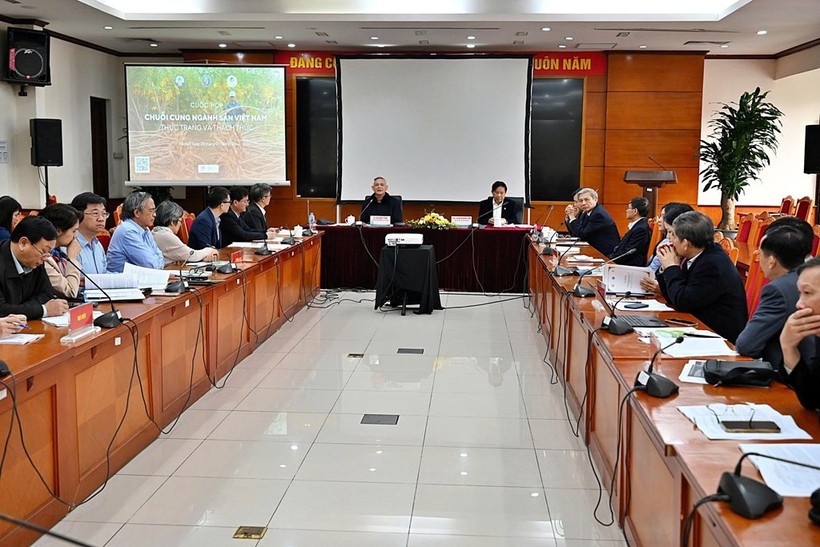
This assessment was highlighted at a meeting titled “Vietnam’s Cassava Supply Chain: Current Situation and Challenges”, held in Hanoi , jointly organised by the Vietnam Economic Science Association of Agriculture and Rural Development, the Vietnam Cassava Association, and Forest Trends. Participants noted that Vietnam is not only a major producer of raw cassava but also a key processing and export hub in the region. The country’s annual cassava supply exceeds 18 million tonnes of fresh roots, with about 58% sourced domestically and the remaining 42% imported, mainly from Laos and Cambodia. Cassava is cultivated on more than 500,000 hectares, producing roughly 10 million tonnes annually, while imports account for around 8 million tonnes.
Despite strong growth in export volumes, export value has increased at a much slower pace. Industry experts emphasised that long-term competitiveness will depend on enhancing value addition through deeper processing. This includes gradually reducing exports of dried cassava chips and low-processed starch, while encouraging investment in higher-value products such as modified starch and cassava-based inputs for the food, pharmaceutical, industrial and bioenergy sectors. Such a shift would improve efficiency, sustainability and resilience against fluctuations in raw material prices.
However, the sector continues to face structural and regulatory challenges. Although several important policies have been introduced, including the Scheme on Sustainable Development of the Cassava Sector to 2030 with a Vision to 2050, implementation has remained limited due to insufficient detailed guidance, weak monitoring mechanisms and a lack of effective incentives. These gaps have made it difficult for businesses and farmers to fully comply with requirements related to traceability, transparency and forest protection.
Environmental and regulatory pressures are also intensifying. While the national cassava cultivation area has slightly declined in recent years, expansion has continued in certain localities, raising concerns over potential impacts on forest resources. At the same time, international markets are tightening standards on legality, traceability and deforestation-free supply chains, particularly under the European Union’s Deforestation Regulation (EUDR), posing increasing challenges for Vietnam’s cassava exports.
Speakers at the event highlighted that ensuring traceability remains one of the most difficult issues, especially at the raw material stage, which involves both domestic farmers and imported cassava. To address these challenges, experts called for a comprehensive restructuring of the cassava supply chain, including stronger control over production and land use, formalisation of informal activities, and improved transparency across the entire value chain.
From the business perspective, cassava enterprises reaffirmed their commitment to building a transparent and sustainable supply chain that meets environmental, forest protection and traceability standards. Industry representatives also urged authorities to provide clearer guidance, practical monitoring tools and appropriate support mechanisms to help businesses and farmers adapt to evolving international requirements and ensure the long-term sustainability of Vietnam’s cassava sector.
Source: Vietnam third-largest cassava exporter, supply chain still faces hurdles | Vietnam+ (VietnamPlus)